
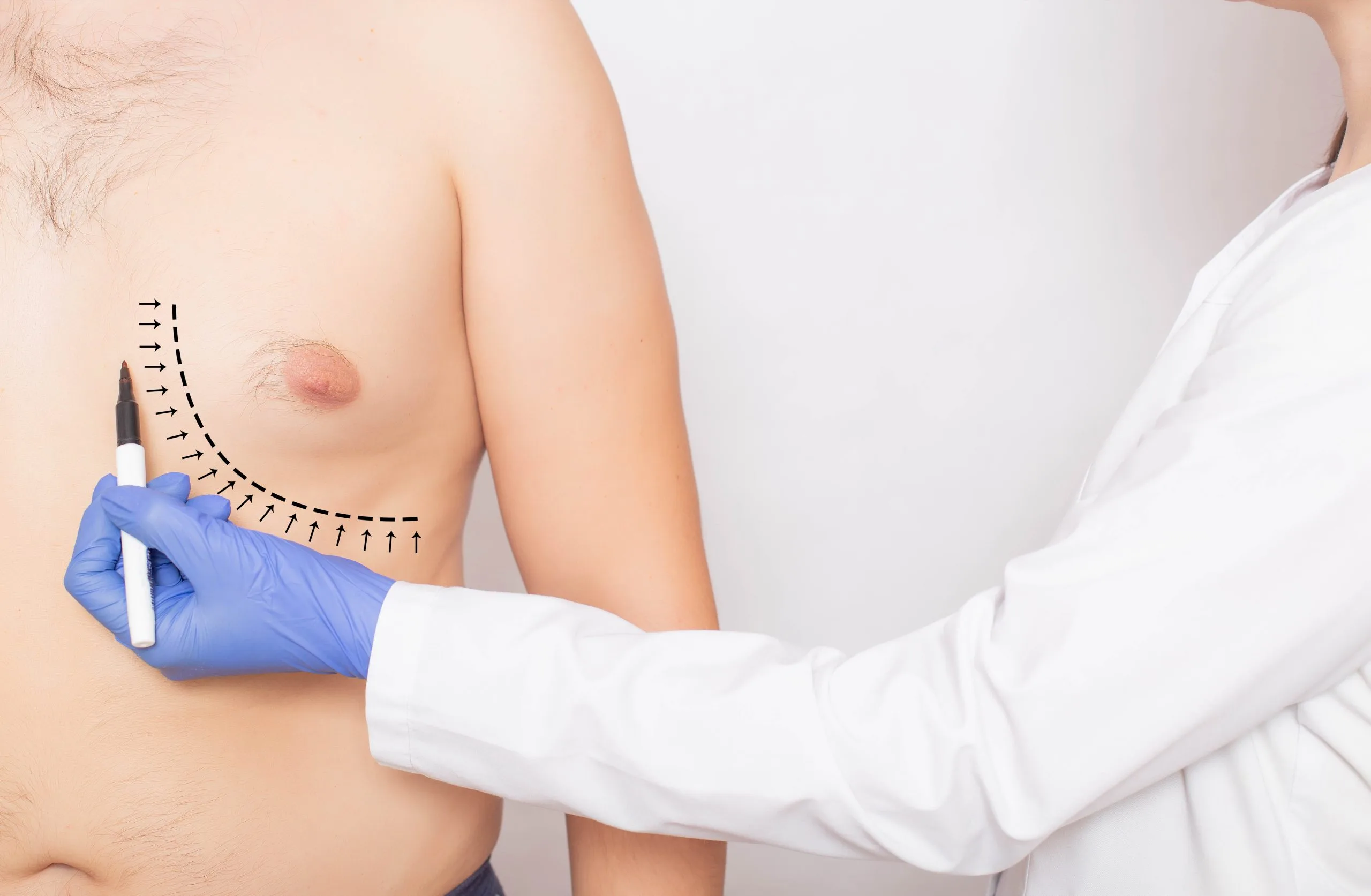
Gynecomastia Surgery vs Chest Liposuction: Which to Choose?
If you are comparing gynecomastia surgery and chest liposuction, the key difference is simple: chest liposuction removes excess fatty tissue to create a more sculpted chest, while gynecomastia surgery removes the dense glandular tissue that liposuction cannot effectively treat. Choosing the right procedure depends on the underlying cause of chest enlargement – whether it is primarily fat, glandular tissue, or a combination of both.
During your consultation in Fort Lee, NJ, our team will evaluate your anatomy and recommend the approach best suited to your goals.
Understanding Gynecomastia
Gynecomastia is the medical term for the overdevelopment of glandular breast tissue in men – it is not simply excess fat. It can affect one or both sides, often creating a puffy, conical, or breast-like appearance that does not respond to diet or exercise. The tissue feels firm or rubbery, particularly directly behind the nipple, and can stem from hormonal shifts, certain medications, weight gain, or genetics.
The distinction matters because fat and gland behave differently. Fat can be reduced with liposuction and lifestyle changes; dense glandular tissue usually requires surgical removal. At Cross Hudson Plastic Surgery, Dr. Boris Mordkovich identifies the underlying cause so results are lasting. Learn more on our dedicated gynecomastia treatment page.
Gynecomastia Surgery Explained
Gynecomastia surgery, or male chest reduction, is the definitive treatment for removing the firm glandular tissue that liposuction cannot break up or suction out. The procedure uses a small, discreet incision, typically around the border of the areola, through which Dr. Boris Mordkovich removes the excess gland – eliminating the root cause of the puffy appearance. Because many men have both fat and gland, treatment often combines liposuction with gland removal.
What Is Chest Liposuction?
Chest liposuction targets the fatty component of an enlarged male chest. Through very small entry points, excess fat is gently removed to create a flatter and firmer look. When chest fullness is caused mostly by soft tissue rather than dense gland – a condition sometimes called “pseudogynecomastia” – liposuction alone may be enough.
We specialize in awake liposuction, performed without general anesthesia, which many men prefer to avoid the grogginess and longer recovery of being fully under. Dr. Mordkovich offers advanced procedures, such as laser-assisted liposuction and BodyTite, that use heat to tighten skin while removing fat, helping to create a smooth, well-defined chest contour.
Comparing Chest Liposuction and Gynecomastia Surgery
Chest Liposuction: Uses a thin, hollow cannula to suction out excess fat cells, reshaping areas of soft, pinchable tissue. Highly effective when the fullness is purely fatty.
Gynecomastia Surgery (Gland Excision): Surgically removes the firm, rubbery glandular tissue that sits deeper. This is the only way to eliminate the distinct “puffy nipple” look of true gynecomastia.
Liposuction Alone: When Is It Enough?
Liposuction on its own may be enough when fullness is caused mostly by fat with little to no gland. Good candidates typically have:
Good skin elasticity, allowing the skin to retract smoothly over the flatter contour
Soft, fatty tissue felt evenly throughout the pectoral area
No firm disc of tissue behind the nipple
A stable weight at or near a healthy range
Gland Removal: When Is It Necessary?
Gland removal is essential for any patient with true gynecomastia. If you can feel a firm, button-like disc of tissue beneath the nipple that does not change with weight loss, liposuction will not remove it – and treating the gland with liposuction alone can make the gland even more noticeable.
Glandular excision is necessary to:
Eliminate persistent puffiness around the nipple
Create a truly flat, masculine chest profile
Provide a permanent solution, as the removed gland will not grow back
Combining Liposuction and Gland Removal
For the majority of men, the ideal approach is not “either/or” – it is both. Most cases involve excess gland plus surrounding fat, and combining techniques in a single procedure delivers a comprehensive result.
Choosing the Treatment for Your Needs
Deciding between these options requires a professional medical evaluation. Understanding the differences is a great first step, but a personalized assessment is non-negotiable for a safe, effective plan.
Factors to Consider
Tissue type: Fat, gland, or a combination – the single biggest factor.
Amount of excess tissue: The volume to be removed shapes the surgical plan.
Skin quality: If skin has stretched, a tightening technique, such as BodyTite, may be recommended.
Weight stability: A steady, healthy weight helps produce lasting results.
Your goals: Some men want subtle refinement; others want a distinctly flat, athletic contour.
Health status: Smokers must stop smoking beforehand, and medical clearance from your primary care physician is required.
Results, Recovery, and Expectations
Because both awake liposuction and awake gynecomastia surgery avoid general anesthesia, many men experience a smoother, more comfortable recovery. You will need a chaperone or driver to take you home.
A compression garment is provided by Dr. Boris Mordkovich and worn to minimize swelling, support healing, and help skin settle against the new contour.
Some swelling and bruising are normal at first and fade over the following weeks.
Most patients return to desk work and light activities within a few days, with strenuous activity resuming after 4-6 weeks as advised.
All postoperative visits are included so that Dr. Boris Mordkovich can follow your progress.
Conclusion: Making an Informed Decision
The decision between gynecomastia surgery and chest liposuction comes down to what is causing your chest fullness. Liposuction is well suited for fatty tissue (pseudogynecomastia), gland removal is required for firm glandular tissue (true gynecomastia), and combining the two often delivers the most natural, masculine result. Because only a hands-on exam can tell which category you fall into, the smartest next step is a personalized evaluation with Dr. Boris Mordkovich at Cross Hudson Plastic Surgery in Fort Lee, NJ.

About the Author
Dr. Boris Mordkovich
Transform Your Look Today!
July 7, 2026
