
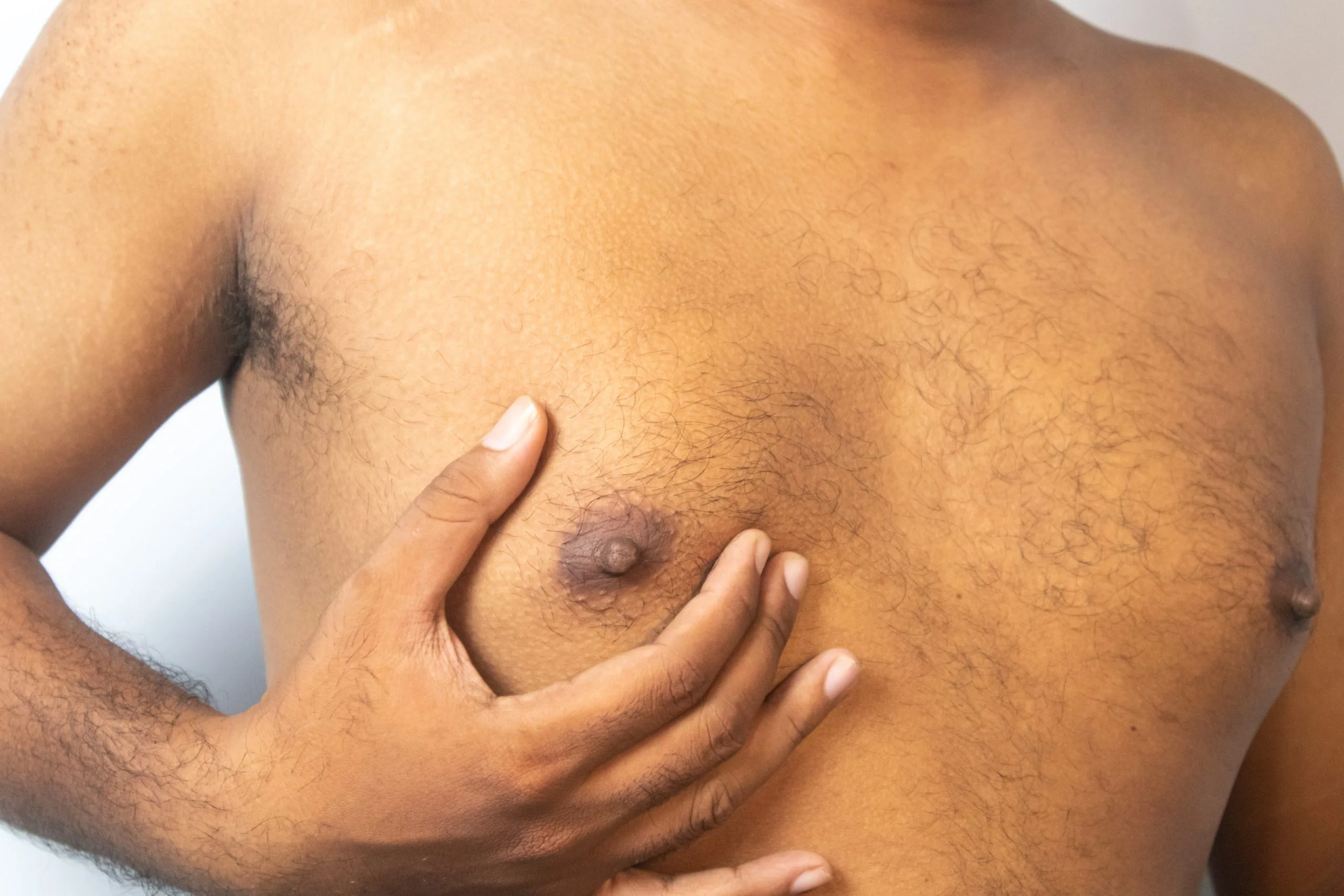
What Causes Gynecomastia and How Is It Treated?
Many men notice changes in their chest and quietly wonder if something is wrong and if there’s anything that can actually be done about it. Enlarged breast tissue in men is more common than most people realize, and it has a name: gynecomastia. It’s caused by a hormonal imbalance between estrogen and testosterone, and depending on the underlying cause and how long it’s been present, it can be treated – often very effectively.
What Is Gynecomastia, Exactly?
Gynecomastia is the development of excess glandular breast tissue in males. It’s not the same as having extra fat on the chest (though that can coexist), and that distinction matters a lot. True gynecomastia involves actual breast gland tissue that grows in response to hormonal shifts. No amount of exercise or dieting will eliminate glandular tissue. That’s why so many men who are otherwise lean and fit still struggle with chest fullness or puffiness that won’t budge.
It can affect one side or both, and it can range from a small amount of tissue behind the nipple to more noticeable fullness across the chest. In some cases, there’s also tenderness or sensitivity in the area.
What Actually Causes It?
The root cause is almost always a relative imbalance between estrogen and testosterone, specifically, too much estrogen activity compared to testosterone. This can happen for a variety of reasons:
- Puberty. The most common time for gynecomastia to develop. Hormones fluctuate dramatically, and many teenage boys develop some degree of breast tissue. In most cases, it resolves on its own within a couple of years – but not always.
- Aging. Testosterone levels naturally decline as men get older, which can tip the hormonal balance toward estrogen. Gynecomastia becomes increasingly common in men over 50.
- Medications. A surprising number of drugs list gynecomastia as a side effect. These include certain blood pressure medications, anti-androgens, ulcer drugs, antidepressants, anabolic steroids, and medications used to treat prostate conditions.
- Substance use. Alcohol, marijuana, heroin, and amphetamines have all been associated with hormonal disruption that can lead to breast tissue growth.
- Medical conditions. Hyperthyroidism, liver disease, kidney failure, and tumors affecting the testes or adrenal glands can all create hormonal imbalances that trigger gynecomastia.
- Idiopathic causes. In a significant portion of cases, no clear cause is ever found. That can be frustrating to hear, but it doesn’t change the fact that treatment options still exist.
Is It Harmful?
Gynecomastia itself isn’t dangerous in most cases. It’s not a precursor to male breast cancer (though that’s a separate, real condition worth being aware of). What it does affect is quality of life.
Men with gynecomastia often avoid situations where they have to take their shirt off. They skip beach trips, change how they dress, avoid the gym locker room, or feel a persistent low-grade self-consciousness that follows them through daily life. The emotional weight of that is real, and it deserves to be taken seriously.
What are the Treatment Options?
Treatment depends on the cause, the duration, and the composition of the tissue.
Addressing the root cause first. If gynecomastia is linked to a medication, stopping or switching that medication under medical supervision sometimes resolves or reduces the issue. If it’s connected to a treatable medical condition, addressing that condition is the first step.
Medications. In some cases, especially when gynecomastia is recent and still in an active phase, medications like tamoxifen or raloxifene (drugs that block estrogen receptors) have shown some effectiveness. These are more likely to help when tissue hasn’t yet become fibrous. They’re not FDA-approved specifically for gynecomastia, but they’re used off-label with reasonable evidence behind them.
Surgery. For many men, particularly those whose gynecomastia has been present for years or those who have dense tissue that won’t respond to medication, surgery is the most reliable and permanent solution.
Surgical treatment for gynecomastia typically involves:
- Liposuction to remove excess fatty tissue around the chest
- Excision (surgical removal) of the glandular breast tissue itself, usually through a small incision at the edge of the areola
- Often, a combination of both techniques for the most sculpted result
Recovery is generally straightforward. Most men take about a week off work and wear a compression garment for a few weeks to support healing and help the skin conform to the new contour. Results are permanent – the removed tissue doesn’t grow back – and the change in how the chest looks and feels can be dramatic.
Cross Hudson Plastic Surgery serves patients in the New York and New Jersey area. To schedule a consultation, contact our office and take the first step toward feeling comfortable in your own skin.
Who Is a Good Candidate for Surgery?
Good candidates are men who:
- Have gynecomastia that has been stable for at least six months to a year
- Are in good overall health
- Are at a relatively stable weight
- Have realistic expectations about outcomes
- Have already addressed any identifiable underlying causes
Age isn’t necessarily a limiting factor. Teenage boys with persistent gynecomastia that hasn’t resolved by their mid to late teens may also be candidates, though a surgeon will typically want to confirm the condition has stabilized before operating.
What to Expect From a Consultation
A consultation for gynecomastia is a private, judgment-free conversation. A surgeon will examine the chest, ask about your health history, medications, and how long you’ve noticed the changes, and may recommend lab work or imaging to rule out any underlying conditions.
You’ll have the chance to talk through what’s been bothering you, what your goals are, and what the surgical plan would look like in your specific case. Seeing before-and-after photos of similar patients can also be helpful in setting expectations.
There’s no pressure, and there’s no wrong reason to have the conversation. A lot of men sit with this concern for years before finally asking about it. The ones who do ask almost universally say they wish they’d done it sooner.
The Bottom Line
Gynecomastia is a medical condition, not a personal failing. It develops because of hormonal changes – many of them completely outside your control – and it affects a significant number of men at various points in their lives. Understanding what’s behind it is the first step, but the more important thing to know is that effective treatment exists.
Whether through lifestyle adjustments, medication, or surgery, there are real paths forward. If your chest has been a source of frustration or self-consciousness, that’s worth addressing. The results of doing so can be genuinely life-changing.

About the Author
Dr. Boris Mordkovich
April 29, 2026
